Trade show trends in 2026 have been more nuanced than a simple return to normal. As we look across industry research and the conversations it should prompt for exhibitors, several developments stand out. Growth is encouraging, but attendees are more selective about the value of a trip. Technology matters, yet a clear product conversation still does much of the work. Here are five things that have surprised us so far, and what exhibitors can do with them.
1. Growth can be real and still feel uneven
The 2026 CEIR Index report from IAEE forecast 2.1% growth for the U.S. business-to-business exhibition industry in 2026. That is a positive signal, but a forecast is not a guarantee for every show. IAEE also pointed to elevated costs, trade policy uncertainty, travel expenses and geopolitical tensions as risks. Different sectors and events can move at different speeds.
That mix is a useful reminder to plan for the specific show in front of you. Ask organizers for recent attendance and exhibitor data. Compare it with your own lead quality, meetings and sales cycle. A crowded aisle is encouraging, but it does not tell you whether the right buyers came to your booth.
2. The value of attending is under a sharper microscope
Freeman surveyed nearly 20,000 people for its report on non-attendees. Its finding is striking: people who stay away are making a value decision. If an event does not appear likely to advance their professional goals, they may skip it. Cost and time are part of that calculation.
Exhibitors can help make the trip worthwhile. Put a useful demonstration, a knowledgeable specialist and a specific takeaway on the floor. Tell prospects in advance what they can learn in a 15-minute meeting. Make booking that meeting easy. If you invite someone to travel, give them a better reason than “come see our booth.”
3. A beautiful exhibit still needs a job to do
Visual impact opens the conversation; it should not become the entire strategy. Freeman’s research on event commerce reported that commerce outranked experience, learning and networking as the leading reason people attend. Its experience research also says attendees want an environment that helps them learn, connect or find a solution.
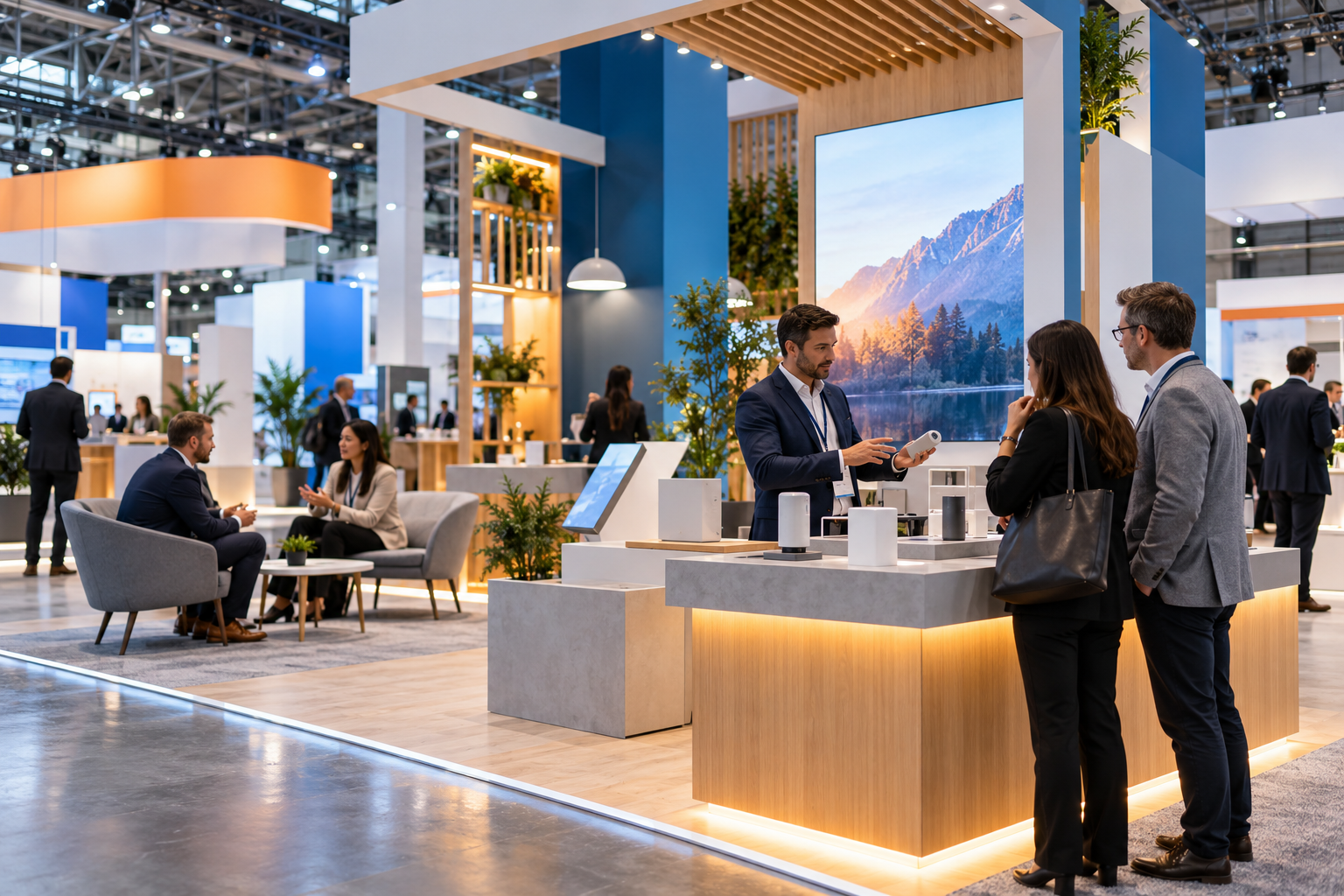
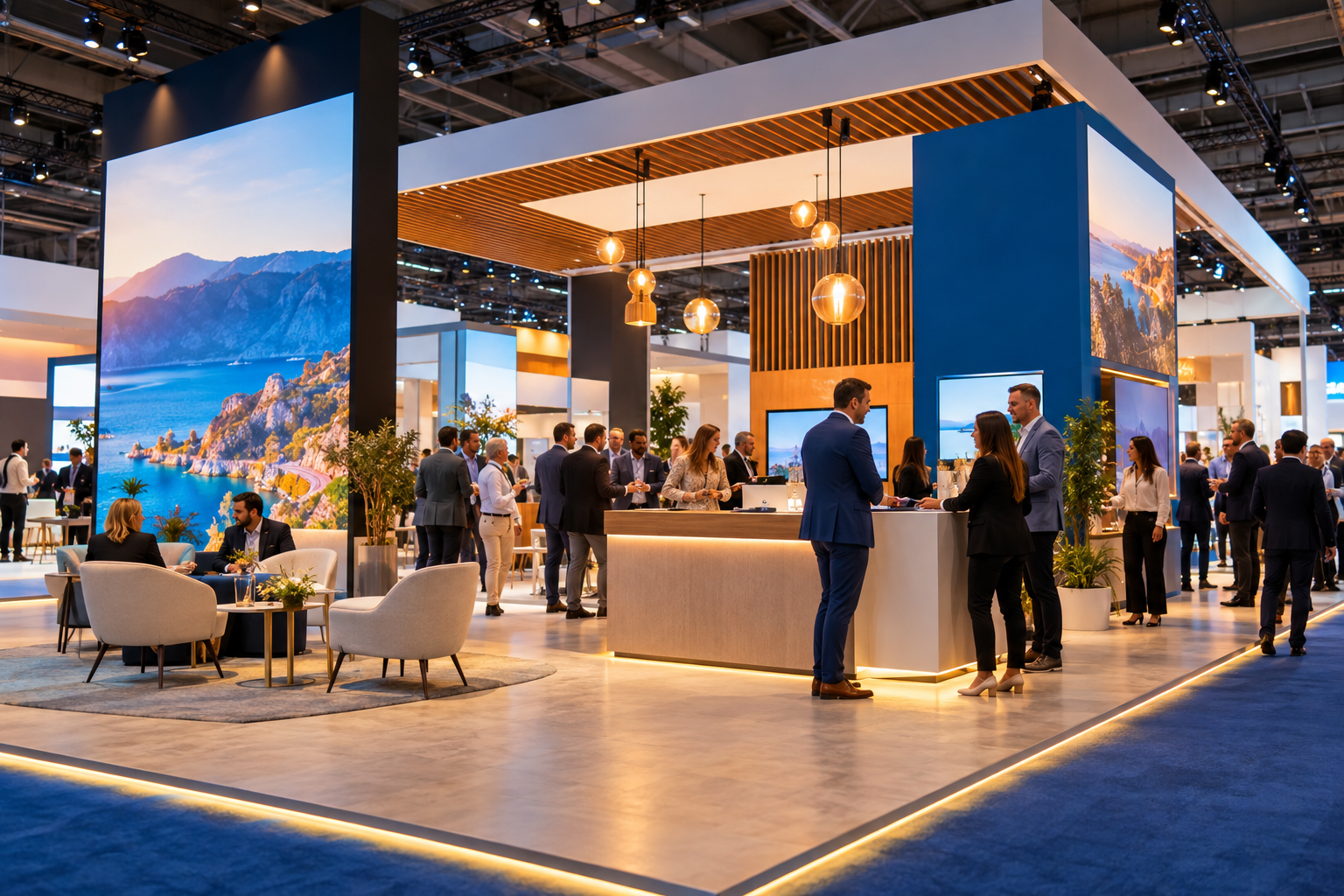
For booth design, that means giving each area a purpose. Can a visitor understand the offer from the aisle? Is there room to test or compare a product? Can staff move naturally from a quick explanation to a deeper discussion? A dramatic screen is useful when it clarifies a story. It is less useful when it competes with the person trying to tell it.
4. Smaller, more focused moments may outperform a broad pitch
It is tempting to design one message for everyone who walks past. But buyers, current customers and potential partners may need different answers. A compact demo station, a meeting table and a clear path through the booth can support all three without forcing every visitor through the same presentation.
Before the show, choose two or three audience groups and write the question each group is likely to ask. Then train your team to listen first and offer the right demonstration. Afterward, tag leads by interest and next step. That makes follow-up more useful than sending one generic email to every badge scan.
5. Measurement is becoming part of design
IAEE’s Index tracks exhibit space, professional attendance, exhibiting companies and gross revenue at the industry level. An individual exhibitor needs its own scorecard. Start with a short list: qualified conversations, scheduled meetings, product demonstrations, opportunities created and progress after the show. Pick measures that connect to the reason you exhibited.
Build the measurement plan before the exhibit is built. Give staff a simple way to record the visitor’s need and agreed next action. Set a follow-up owner and deadline. A thoughtful booth can attract attention; a reliable process turns that attention into a useful business conversation.
What should exhibitors do next?
Use the rest of 2026 to test one improvement at a time. You might simplify your message, replace a passive screen with a hands-on demo, or schedule more meetings before the doors open. Compare results across shows, and keep what helps your audience. The lesson so far is encouraging: face-to-face events still offer opportunity, especially when the exhibit respects the visitor’s time and makes the next step clear.
LAB Exhibits & Services can help translate those goals into a custom or rental exhibit, with space for demonstrations, meetings and a smooth show-floor experience. Start a conversation about your next show.