“Innovation distinguishes between a leader and a follower.”
– Steve Jobs
The world of Virtual Experiences in the Trade Show Community is like the Wild, Wild West. There are no industry standards or a set of rules to follow.
At Lab Exhibits & Services, we are continuously receiving inquiries regarding the capabilities of Virtual Reality Environments (VRE) along with their costs.
Every company expects something different from a virtual exhibit or event. Because the technology was still emerging when this article was written, teams often approached the investment carefully.
At some point, any company that wants to be a leader in their field will find their marketing departments evolving to make VRE a crucial part of their trade show strategy.
If you are not already looking into it, your manager will soon ask you to find out more about a virtual environment for an upcoming event.
Today, our objective is to help you better understand the differences between the two most popular types of virtual environments in 2022.
- The first type is a 3-D Image of a Trade Show Exhibit built like an Interactive Website.
- The second type is a Fully Immersive Virtual Reality Environment.
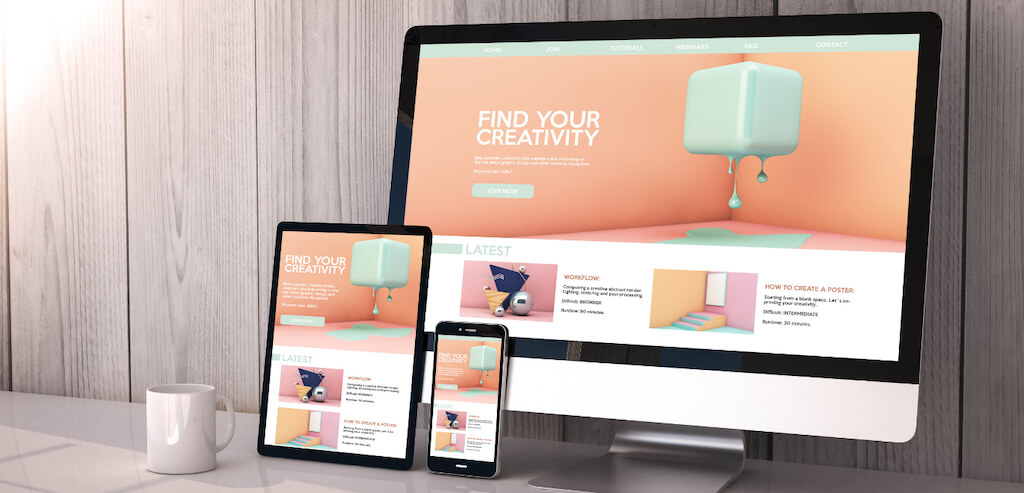
An interactive 3D website is a dedicated site that uses 3D technology through a web browser. This environment typically looks like a 3-Dimensional trade show display or any setting you choose and acts like a website. A person will visit the site and point at hotspots to discover information about a company and its products and services.
In the world of virtual, it is a good start but very limited. It does not allow for much of a social experience outside of a Live Chat or a built-in Zoom Call option.
If you are only looking to recreate your website in the form of a 3-Dimensional exhibit with touchpoints and hot spots for your audience to discover information, this option is for you.
Interactive 3D Websites
- Application Features – 3D websites are web-based sites accessible like a regular website and can run on multiple platforms. Older browsers may require updated flash players to run the website correctly, and some sites may require registration to gain entry. Your company can host the site on your server or through a third party.
- User Features – Users can explore the site by clicking on various hot spots. They can explore product or service information and can watch embedded videos. Navigating the site is an entirely user-directed experience, available day, or night.
- Design – Unlike most websites with flat graphics, these websites use rendered 3D graphics to display products or services. The technology allows the user to spin a product around or zoom in on it. Clickable hot spots can display pre-recorded videos or product information. It is a non-linear design that allows users to bounce around to other areas that interest them.
- Audience Engagement – People who visit these sites may spend more time navigating and exploring than a typical website. However, it is entirely user-driven, and visitors can click away at any time. It is a one-sided experience, and most interactive elements need to be clicked on or launched by the user.
- Adaptable Show Content – The website can be revised and customized to support new videos and messages.
- Ownership – If you choose not to have the website modeled after your own display, a stock design with brand embellishments can be utilized for purchase or rental depending on the length of use.
Fully Immersive Virtual Reality Environments
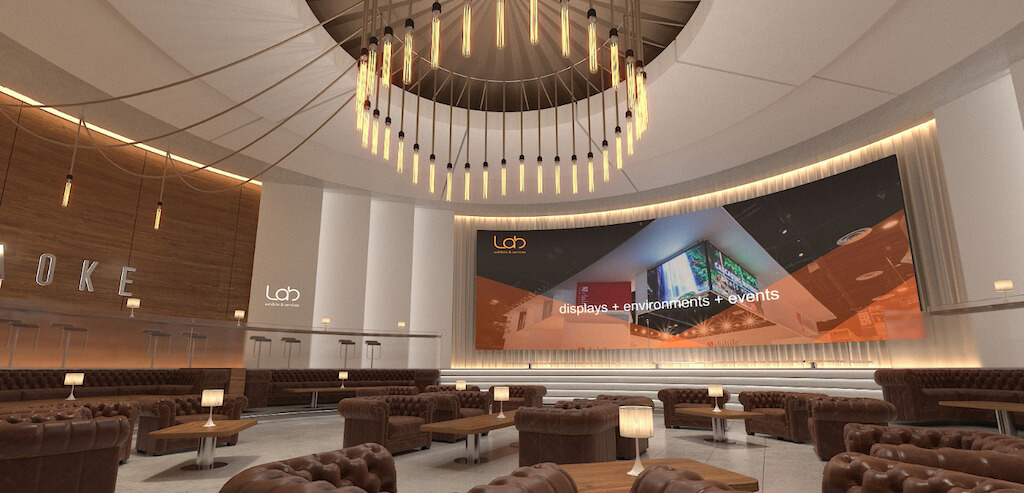
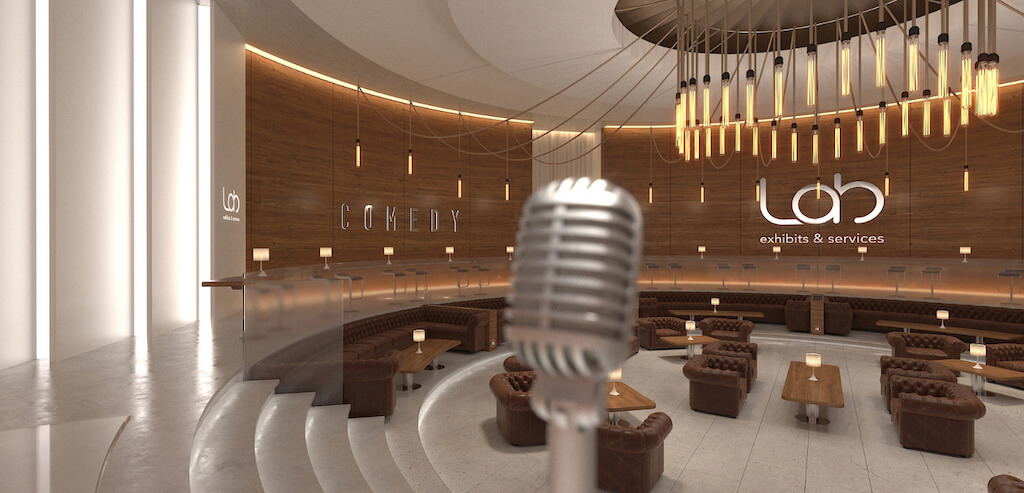
An immersive virtual environment lets visitors explore a digital space through an avatar. They can interact with people and products in real time. The space may include meeting rooms, lounges, games, or a theater. These features can make the experience more social than a simple 3D website.
Audiences can make real one on one connections in Virtual Reality environments.
Advances in technology made these experiences easier to access. Visitors can often join on a computer, tablet, or phone while the event is live. Check the platform’s actual device requirements before inviting attendees.
Visitors may choose and customize an avatar. They can then enter the live event or booth and explore the space.
Guests can explore products, watch videos, and speak with other attendees. They may also join Q&A sessions or private meetings. These interactions can help exhibitors build relationships, which remains a key goal of any event.
If you have not had an opportunity to visit a VRE, please contact me at ezilinskas@labexhibits.com for a real-time demonstration.
Virtual Reality Environments not only create a memorable brand experience, they can potentially increase your market share and catapult your organization as an industry leader.
Virtual Reality Environments
- Application Features – Environments are cloud-based platforms that do not require a download and work with all internet browsers. There are no size limits to space or number of users. Due to the computer horsepower necessary to run a VRE, very few companies can host this independently. We have been using Amazon Servers with Tesla cards to support the experience.
- User Features – Visitors create an avatar based on their preferences. They can walk around in private mode or have their name hover above their head as they interact with others. If they choose to walk the show with a group of associates, they can electronically tether themselves to each other to stay connected. Voice over IP allows them to speak to each other within the various spaces.
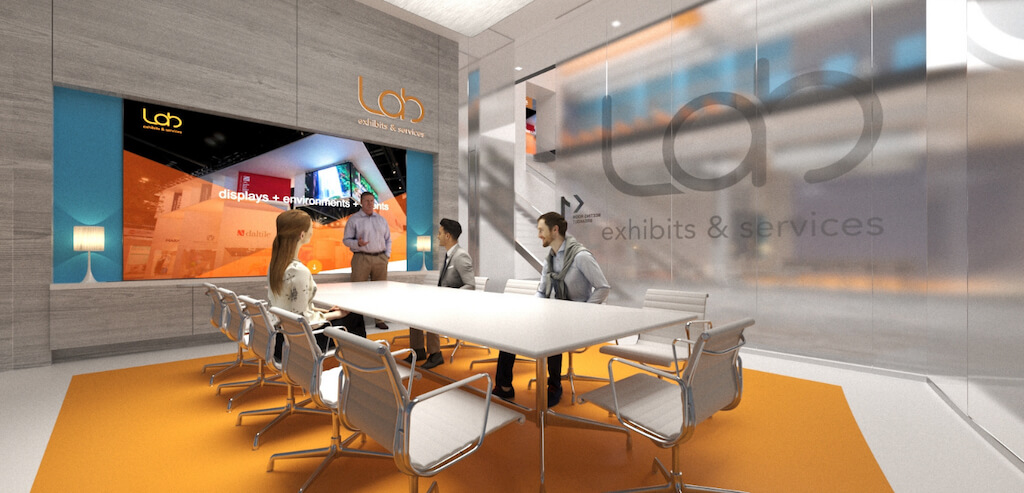
- Design – A virtual exhibit concept can look exactly like your company’s current display, carry your brand, and tell your story. It can include conference rooms to simulate arriving for an appointment and social and gaming spaces such as a Happy-Hour. Exact models of interactive products, animations, fly-throughs, and videos can all enrich the informative experience.
- Audience Engagement – As visitors explore the environment using their avatar, they can walk up to products or kiosks and watch videos. They can ask questions to a live person shown on a monitor through Zoom or in avatar form. They can experience live product demos and meet one on one. Your guests can register for the event weeks in advance, and you can engage with them leading up to the show and follow up after the event.
- Adaptable Show Content – A VRE can be revised and customized, as necessary. The primary design elements remain the same, but the interactive portions and visuals can all be easily updated or shared in other sales and marketing modes. It can serve as a sales presentation, showroom, training seminar, etc.
- Ownership – Exhibitors can lease or purchase to own a virtual structure with brand embellishments. Renting also allows the exhibitor to test out the capabilities before designing a tailored environment.
Choosing the Right Virtual Experience
Virtual experiences and interactive 3D websites share many features. The main distinction here is live interaction among participants. An immersive event can give visitors a shared place to meet exhibitors and peers.
A 3D website can still present useful information. However, it may offer fewer ways for visitors to connect with each other. If the experience relies on recorded content, it cannot replace a live discussion.
Cost depends on the scope of the experience. Key factors include the design, number of visitors, interactive features, hosting, and production schedule. Ask vendors what the quote includes and whether you will own or license the finished environment.
A 3D website may cost less than a live immersive environment, but prices vary by scope. Choose the option that supports your audience and goals. Ask for comparable proposals before making a decision.
Virtual environments can reach people who cannot attend a live show. They may also complement an in-person event. The right mix depends on your audience, budget, and reason for bringing people together.
At Lab Exhibits & Services, we can help you with all your live trade show, and virtual event needs and open new opportunities to increase market share.
For more resources and information, click here!